
Hyaluronic Acid Dissolving and Correction
Carefully delivered hyaluronidase to soften, refine or fully dissolve hyaluronic-acid filler — including filler placed elsewhere — so we can rebuild from a calmer baseline.
Overview
Understanding Hyaluronic Acid Dissolving and Correction
Hyaluronidase is an enzyme that breaks down hyaluronic acid — both the synthetic kind used in dermal filler and naturally-occurring hyaluronic acid in the skin. Used carefully, it can dissolve filler partially (to refine) or fully (to reset). It is also used in emergencies for vascular complications. We treat dissolving with the same care as any other clinical injectable: with clear assessment, written consent, and an honest conversation about what dissolving will — and won't — do.
Our Hyaluronic Acid Dissolving and Correction Treatments
Reversibility
Hyaluronic-acid filler can be partially or fully reversed — that's the point of HA.
No Judgement
We see clients unhappy with previous work often. We listen and plan, not lecture.
Two-Stage Approach
Often we dissolve in stages — refine, review, decide. You do not have to commit to full reversal.
Emergency Protocol
Vascular complications from recent filler are an emergency. We take them seriously.
Who It's For
Is this category right for you?
The clients who benefit most from hyaluronic acid dissolving and correction typically share one or more of these goals.
- Filler placed elsewhere that you are unhappy with
- Migrated filler that has spread beyond its original placement
- Lumps, irregular contour or asymmetry from previous treatment
- Over-filled features (lips, cheeks, tear-troughs) that distort proportions
- Resetting to a baseline before deciding on future treatment
- Vascular emergency or compromised circulation after recent filler (urgent care)
Why dissolving exists in the first place
Hyaluronic-acid filler is deliberately reversible. The single biggest safety advantage of HA over older permanent fillers is that you can change your mind, fix a complication, or correct overdoing — by injecting an enzyme that breaks the gel back down to its component sugars, which the body clears within days. This is not failure. It is how the modern filler category is designed to work.
We see clients come in for dissolving in three broad scenarios:
- Refinement of a recent treatment — a small lump, mild asymmetry, or 'just a bit too much' that doesn't need a full reset.
- Resetting after years of accumulated treatment elsewhere — clients who have had filler in multiple areas over many years and want to get back to baseline before deciding what, if anything, to add.
- Emergencies — vascular compromise from a recent filler injection. This is an urgent medical situation handled with high-dose hyaluronidase as fast as possible.
What we offer
- Hyaluronidase injection — targeted dissolving of HA filler in specific areas, in stages where appropriate.
- Topical hyaluronidase — a non-injection option for selected superficial cases.
- Emergency dissolving — established protocol for suspected vascular events from recent filler.
Specifics, pricing and protocols are on each treatment page.
Our approach to dissolving
For non-urgent dissolving, we believe in two-stage thinking:
- Plan and dissolve — identify the areas that bother you most, dissolve those carefully, and stop there.
- Wait and review — give the area 2–4 weeks to settle. Look at the baseline. Decide what (if anything) you want to add.
Many clients arrive expecting full dissolving everywhere, dissolve only what was bothering them, and never go back to the rest. Some go further on a second visit. Some never want filler again — and we are happy with that outcome too.
When to come in urgently
Sudden severe pain, blanching of the skin, a dusky or purple discolouration, or visual symptoms in the hours and days after a recent filler injection are not normal post-procedure soreness — they may indicate a vascular event. Contact the clinic that placed the filler immediately. If they are unavailable and you can reach us quickly, call us. Time matters. This is one of the situations where rapid hyaluronidase treatment makes the biggest difference.
FAQs
Hyaluronic Acid Dissolving and Correction — questions we are asked most
How long after dissolving can I have new filler?
Will hyaluronidase dissolve my own natural hyaluronic acid?
Does dissolving hurt?
Will I see results immediately?
Is there any risk of allergic reaction?
Can you dissolve filler placed by another clinic?
What about filler that's not hyaluronic-acid based?
Speak to our clinical team
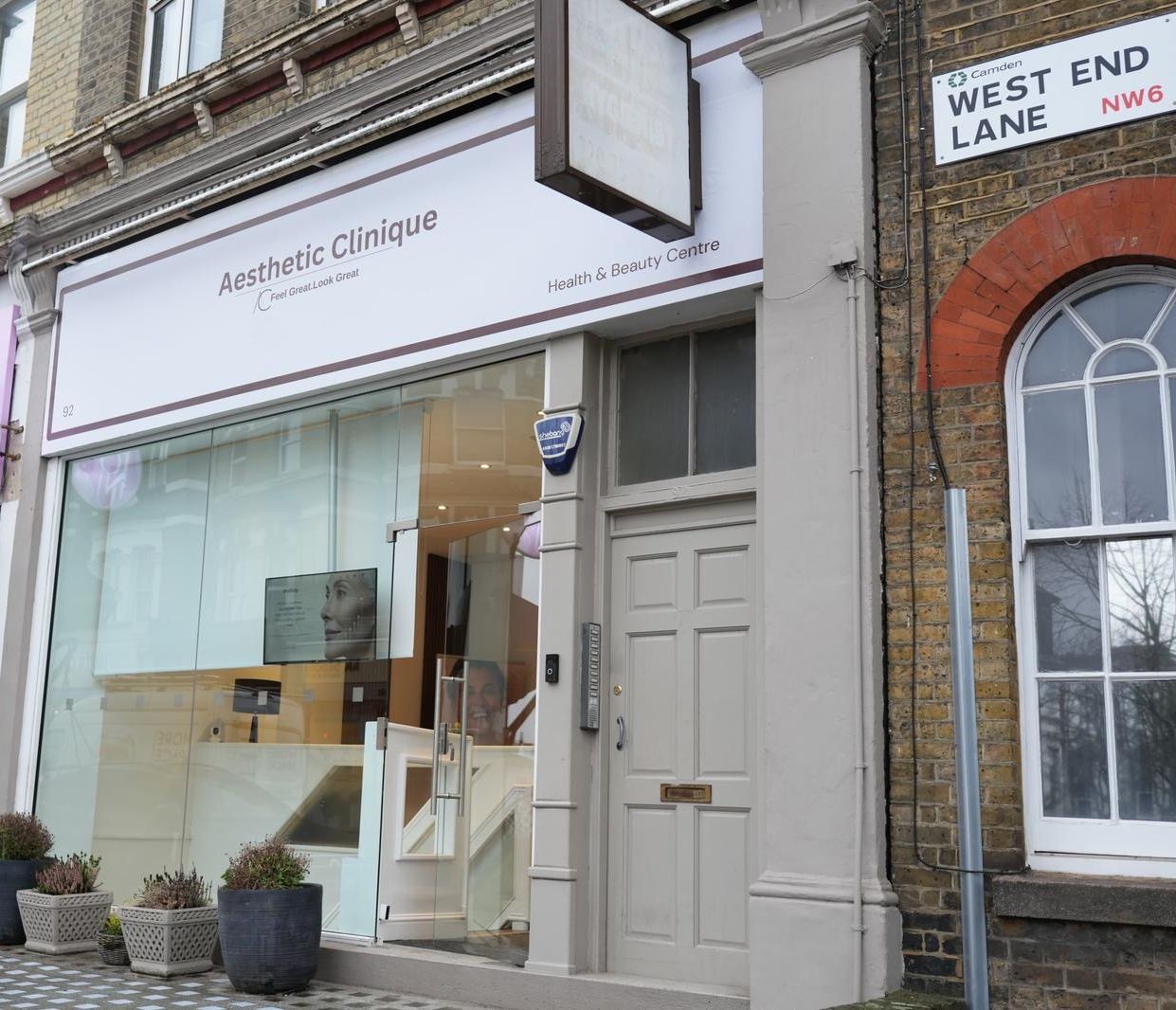
Every hyaluronic acid dissolving and correction plan begins with a private consultation in West Hampstead. We will review your goals, assess suitability and recommend the smallest effective intervention.