
Filler Dissolving
Injected enzyme treatment to dissolve unwanted, migrated or excess hyaluronic acid filler.
Duration
45 min
From
£200
Per area, per session
Treatment Summary
Hyaluronidase is an enzyme that rapidly breaks down hyaluronic acid (HA) filler — the type of filler used in virtually all modern lip, cheek, jawline and tear-trough treatments. Injected hyaluronidase is the gold-standard reversal treatment for HA filler that has migrated, lumped, over-filled an area, distorted facial proportions, or simply needs to be removed before a new approach can be planned. It is also the emergency treatment for a vascular event during filler treatment. We approach dissolving as a deliberate two-stage process: dissolve, then wait 2–4 weeks before deciding whether and what to add. We always allergy-screen before treatment.
Also known as: filler dissolver · Hyalase · filler removal · dissolve lip filler · hyaluronidase London · filler reversal
Key Benefits
Effective HA Reversal
Visible reduction in HA filler within 24–48 hours; full effect over 1–2 weeks for most areas.
Resolves Migration and Lumps
Targets areas where filler has spread beyond intended placement (commonly above the upper lip border).
Two-Stage Approach
We dissolve, then wait 2–4 weeks before reassessing — gives skin and tissue time to recover before any new placement is considered.
Practitioner-Led, Allergy-Screened
Always preceded by a patch test in suitable cases and full medical history. Hyaluronidase is a prescription-only medicine.
What hyaluronidase is
Hyaluronidase is an enzyme — present naturally in the human body and produced as a prescription-only medicine for clinical use — that breaks down hyaluronic acid. Because virtually all modern dermal fillers used in cosmetic treatment are HA-based, hyaluronidase is the standard reversal tool when HA filler needs to be removed or reduced.
Beyond its routine cosmetic use, hyaluronidase is the urgent reversal agent for vascular events during filler treatment — the situation where filler is accidentally injected into or compressing an artery, threatening tissue blood supply. Every clinic offering HA filler must have hyaluronidase on site and clinicians trained to use it. We do.
When dissolving is the right next step
Dissolving is the right next step in several common scenarios:
- Migration: filler has spread beyond intended placement. The most common example is HA filler placed in the body of the lip migrating above the upper lip border, producing a "moustache" or shelf appearance.
- Over-filling: too much volume has been placed, distorting proportion. Common in lips, cheeks and chin.
- Tyndall effect: superficial tear-trough filler producing a bluish tint under the eye.
- Nodules and lumps: discrete palpable or visible deposits.
- General reset: long-standing, layered-up filler that needs to be cleared before a fresh, considered approach can be planned.
Our two-stage approach
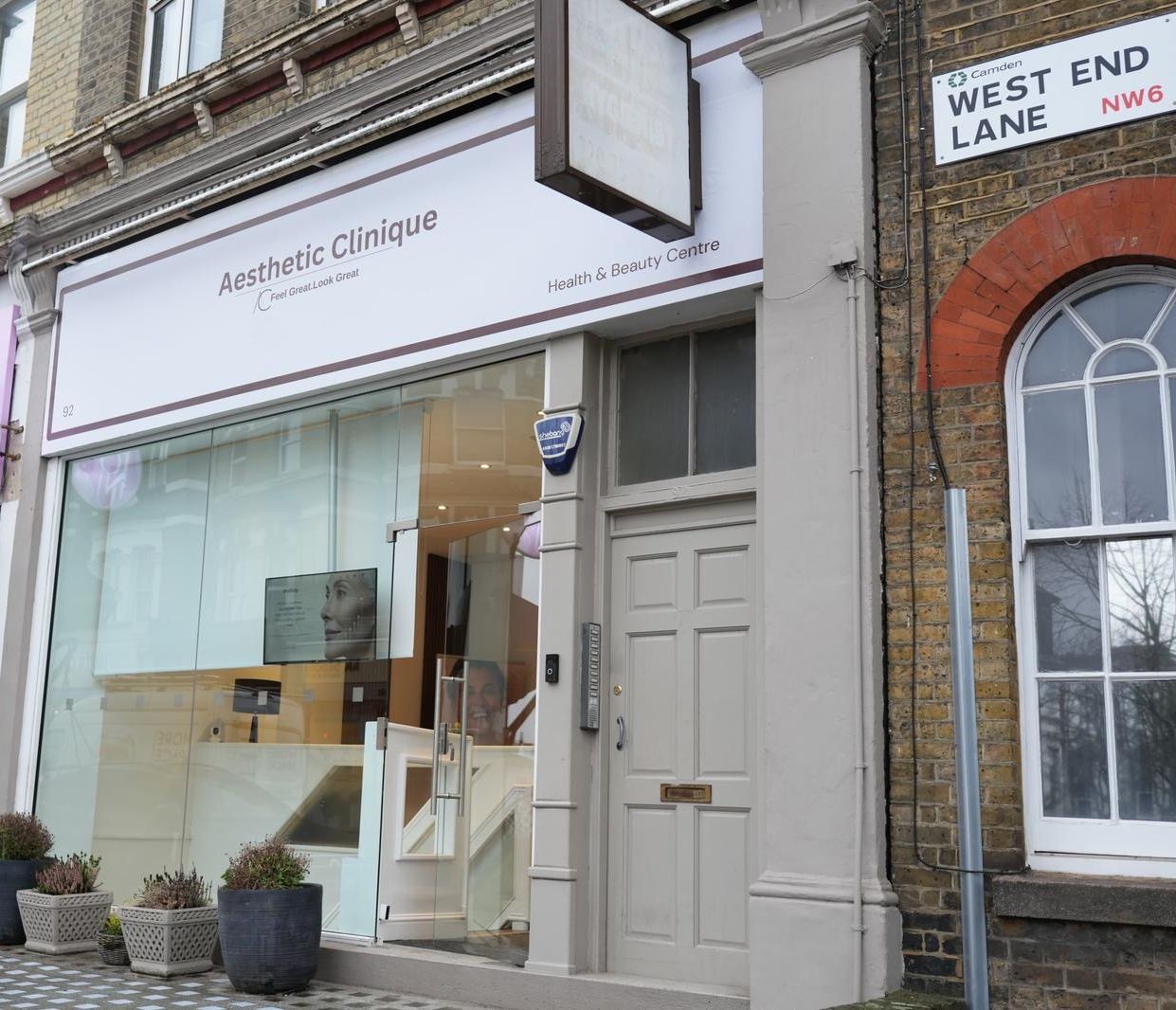
We treat dissolving as a deliberate, two-stage process at Aesthetic Clinique in West Hampstead:
- Dissolve. Targeted injections placed precisely into the filler depot — with measured doses, not maximum doses, because hyaluronidase will also temporarily affect the body's own native HA in surrounding tissue.
- Wait 2–4 weeks. During this window, residual filler continues to break down, native HA regenerates, and the underlying tissue settles into its natural shape. Only then can we accurately plan whether anything new is appropriate.
We will not refill at a dissolving appointment. The two decisions — what to remove, and what (if anything) to add — must be separated, in writing and in time.
Who suits the treatment — and who doesn't
It suits any patient with HA filler they want reduced, removed or reset. It is not effective on non-HA fillers (silicone, polymethylmethacrylate and similar permanent or semi-permanent products), and we will not inject hyaluronidase if we are not confident the filler in question is HA. It is contraindicated in patients with known hyaluronidase allergy, and is approached with caution in patients with bee or wasp sting allergy because of recognised cross-reactivity.
We allergy-screen every patient. A patch test is offered in most cases, particularly for first-time hyaluronidase use, and we have full anaphylaxis-management equipment on site.
What to expect on the day, and over time
Treatment takes around an hour including consent, screening and recovery. Immediate post-injection swelling — particularly in the lips — is normal and can be dramatic for the first few hours; the treated area can temporarily look larger before it begins to reduce. Visible improvement begins at 24–48 hours; full effect develops over 1–2 weeks.
We see you at 2–4 weeks for reassessment. If dissolving is complete and you are content with the result, that is the end of treatment. If further dissolving is needed, a second session is planned. If new filler is appropriate, that becomes a separate consultation and treatment cycle.
What to Expect
- 1
Consultation, palpation and allergy screening
We palpate to map exactly where filler is and how much is present, take a full history including any previous reaction to hyaluronidase, and document allergy and medication history. A patch test is offered in most cases.
- 2
Targeted injection of hyaluronidase
Hyaluronidase is reconstituted to an appropriate concentration and injected directly into the filler depot. Multiple small injections are placed across the area; precision matters more than volume.
- 3
Initial response over 24–48 hours
Visible softening and reduction begin within 24–48 hours. Some swelling immediately after injection is normal — the area can look temporarily larger before reducing. Mild bruising is common.
- 4
Two- to four-week reassessment
We see you 2–4 weeks later to assess whether dissolving is complete, whether further dissolving is needed, and — only then — whether new filler is appropriate. We do not refill at the same appointment as dissolving.
Suitability
Aesthetic care is highly individual. The points below are general guidance — final suitability for filler dissolving is always confirmed in your consultation.
Often suitable for
- Filler that has migrated beyond intended placement (common above the upper lip border)
- Lumps, nodules or visibly over-filled areas
- Filler placed elsewhere that you are unhappy with — including older permanent feeling but actually HA filler
- Patients wanting to 'reset' before a new treatment plan
- Tear-trough filler that has caused chronic puffiness or bluish discolouration (Tyndall effect)
- Emergency reversal of a vascular event during filler treatment (used immediately during the original procedure)
May not be suitable if
- Non-HA fillers (silicone, calcium hydroxylapatite, polylactic acid, polymethylmethacrylate) — hyaluronidase has no effect on these
- Patients with known hyaluronidase allergy or anaphylaxis history
- Pregnancy or breastfeeding (relative contraindication; clinical decision)
- Patients expecting to refill at the same appointment — that is not how we sequence treatment
- Treatment of bee/wasp sting allergy patients without specialist consideration (cross-reactivity)
Aftercare
Caring for your results
A few simple steps in the first 24–48 hours help your results settle as expected.
- Expect immediate post-injection swelling, particularly around lips — this is normal and usually settles in 24–48 hours
- Avoid intense exercise, alcohol and saunas for 24 hours
- Cool packs (not direct ice) help reduce swelling in the first hours
- Mild bruising is common and resolves over 5–10 days
- Avoid further filler treatment to the area for at least 2–4 weeks
- Notify the clinic immediately of any rash, breathing difficulty, or significant swelling beyond the treated area — these are signs of allergic reaction and require urgent assessment
Evidence & Standards
Hyaluronidase is a prescription-only enzyme listed in established UK aesthetic complications guidelines (including the JCCP / CMAC complications protocols) as the standard reversal agent for HA filler and as the urgent treatment for vascular occlusion events during filler treatment. Onset and effect are well-documented in published clinical literature. Allergic reactions are uncommon but recognised — pre-treatment screening is part of the protocol.
Frequently Asked Questions
Will hyaluronidase dissolve all the filler in one session?
Will it dissolve my own natural hyaluronic acid?
Can I have new filler at the same appointment?
Are there allergic reactions?
Will my lips go saggy after dissolving?
Does it work on permanent fillers?
Is hyaluronidase the emergency treatment for a vascular event?
Ready to take the next step?
Book a private consultation with our team to discuss filler dissolving in West Hampstead and decide together whether it is the right treatment for you.